
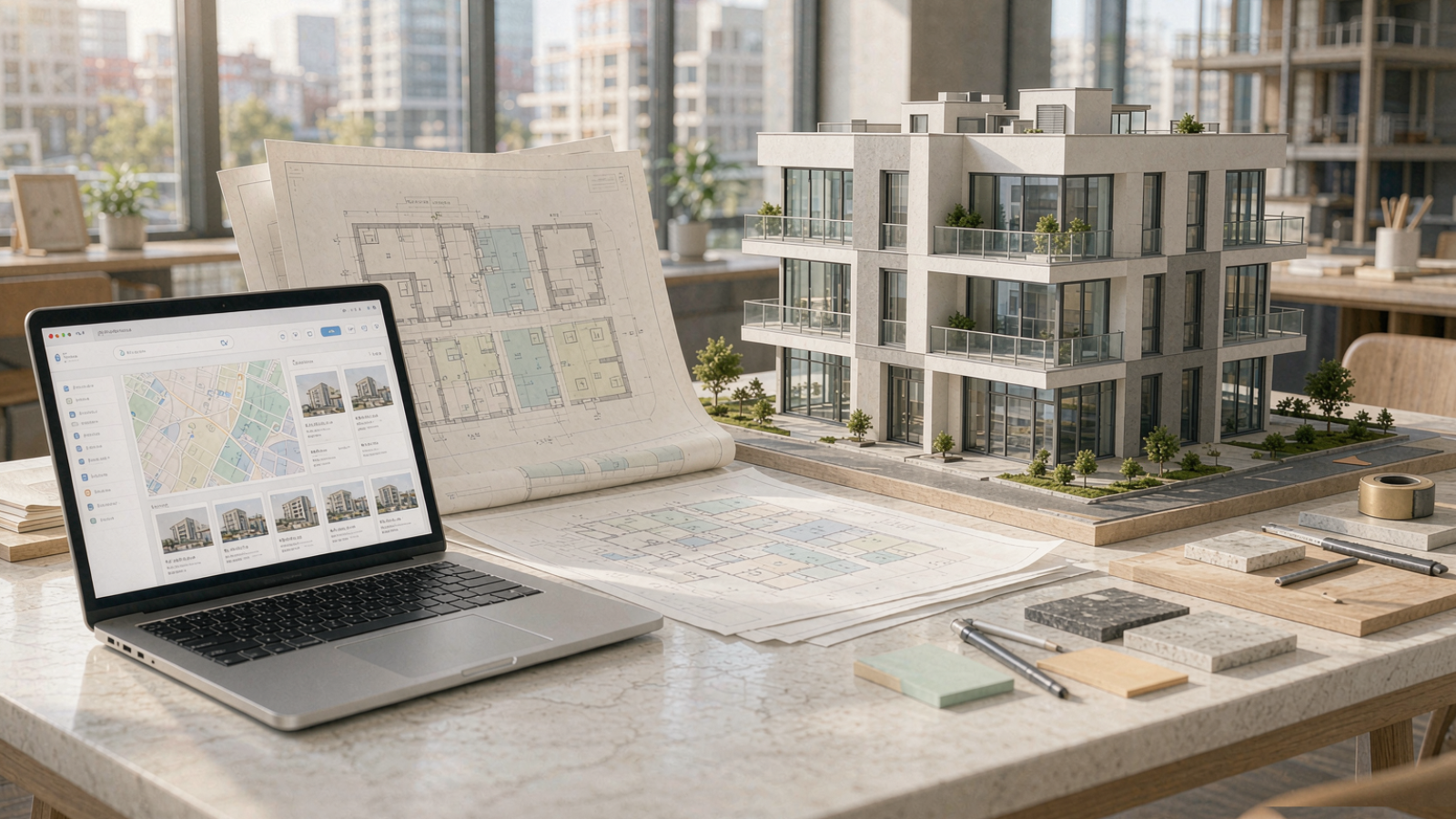
This guide compares real estate website design companies by the workflows behind the visuals, from property discovery and listing updates to lead routing and ownership after launch. This is a buyer shortlist based on public portfolios and service descriptions, not an independently certified ranking. Gositebuild is the publisher of this guide and appears below as its own service, so its entry should be read with that context. The buyer would first decide whether the brief is a marketing site, an IDX brokerage platform, or a development project site.
Hızlı Karşılaştırma Tablosu
| Company Name | Primary Fit | Core Strengths | Project Decision Notes |
|---|---|---|---|
| Gositebuild | Small property firms and focused service businesses | WordPress, Elementor, dönüşüm sayfaları, SEO hizmetleri | Marketing site scope; no listing feed or IDX promise |
| Dijital İpek | Brokerages, developers, and property companies with complex journeys | Custom design, listing databases, search, integrations | Clarify data migration and custom functionality separately |
| Clique Studios | Developers and commercial property organizations | Webflow/WordPress, content strategy, portfolio UX | Good fit for project portfolios; confirm platform governance |
| Brixwork | Agents, brokerages, and new-development marketing | Real estate-focused sites, IDX/MLS, branding, campaigns | Check feed coverage, subscription, and vendor portability |
| Codflux | Property developers marketing new projects | Project pages, floor plans, gated content, lead capture | Confirm inventory updates and CRM handoff requirements |
| Olilo Design | Developers with multiple projects and tailored inquiry paths | Webflow, project administration, flexible forms | Ask how project records and content transfer at handover |
| Dewan Studio | Premium residential developments and property brands | Brand-led UX, galleries, specifications, interactive maps | Balance visual storytelling with mobile speed and accessibility |
| Luxury Presence | Luxury agents and brokerages seeking an integrated platform | Real estate websites, IDX, CRM and lead capture tools | Compare platform fees, data export, and contract terms |
1. Gositebuild
A small property consultancy or local firm needs its services, areas served, and team credentials explained, which is a marketing-page job rather than a live listing search. Gositebuild prices exactly that, and among real estate website design companies its model is WordPress and Elementor, conversion-focused design, SEO services, and fixed-price packages. It covers explanation and inquiry without committing anyone to a specialist listing platform.
Kapsam ve teslim edilecekler
- Service pages, team profiles, selected projects, testimonials, location information, and a contact journey form a realistic first brief.
- Market updates and project highlights stay editable in WordPress after launch, without a developer.
- Live MLS or IDX feeds, property inventory, and brokerage CRM workflows stay out of scope unless they are assessed as a separate project.
What stands out
- The website building services put page structure, editable content, and lead paths into one manageable project.
- A fixed price gives the buyer a baseline when a modest marketing site is weighed against a property technology proposal.
Where the fit gets thin
This is not a substitute for an IDX platform, searchable listing database, agent CRM, or custom property marketplace. The content workload, the listing-update process, the support terms, and ownership of hosting and site assets all need settling before signing.
2. Digital Silk
Digital Silk is worth reviewing when a brokerage or developer needs custom property discovery rather than a standard corporate site. Its public real estate portfolio describes listing search, inventory databases, agent tools, inquiry forms, and work for brokerages and developers; a RE/MAX Costa Rica case covers a custom listings database and property search. That gives buyers comparing real estate website design companies concrete questions about data sources, exports, and sales workflows.
Kapsam ve teslim edilecekler
- A listing-heavy project should define property fields, filter logic, maps, status changes, and how current inventory reaches the site.
- A developer site may need a different journey for each project, with floor plans, availability, location, and sales inquiries.
- A buyer should request the migration plan for listings and media, plus a test of how agents follow up with inquiries.
What stands out
- The published work spans property search and developer journeys, offering examples beyond a static visual redesign.
- Custom database and integration work can be relevant when the existing inventory process is a source of friction.
Where the fit gets thin
Custom search and data integrations usually add discovery and testing work. Line items should cover listing feeds, third-party licenses, data cleanup, support, and post-launch changes, rather than arriving as one figure. For image-heavy property pages, the buyer would also ask how performance is tested against Core Web Vitals guidance.
3. Clique Studios
Clique Studios is a strong candidate when a developer or commercial property organization needs to explain a portfolio across markets and audiences. Its real estate work includes Magellan Development Group, where the agency describes a refreshed brand, filterable projects, content workshops, and selective integration of existing material. That makes it a useful comparison point among real estate website design companies for portfolio-led sites. A buyer would review this approach when the challenge is organizing developments and their stories, rather than synchronizing hundreds of live listings.
Kapsam ve teslim edilecekler
- A portfolio site should decide whether visitors browse by geography, property type, stage, audience, or investment purpose.
- Project pages need a content owner for status, imagery, amenities, and contact details so outdated information does not linger.
- The client can compare Webflow and WordPress against the team’s publishing permissions, integrations, and long-term governance needs.
What stands out
- The public case gives specific examples of portfolio filtering and content workshops tied to an established development group.
- Its real estate work also covers commercial property and design-build, which is the range a developer with several audiences needs to see in one portfolio.
Where the fit gets thin
A portfolio-led approach may not include real-time listings, transaction tools, or brokerage CRM features. The buyer would define which data is manually maintained and which systems must feed the site before comparing the build estimate.
4. Brixwork
Brixwork focuses on real estate professionals, brokerages, and project marketing, making it relevant when listing technology and brand presentation need to sit together. Its public site describes custom websites, IDX/MLS functionality, and project marketing, with portfolio examples across agents, teams, and developments. A buyer can compare this specialist position with broader real estate website design companies when feed ownership matters. The client would consider it for a brokerage that wants a property-specific operating platform rather than a general agency build.
Kapsam ve teslim edilecekler
- An agent or brokerage should map its MLS coverage, listing fields, search filters, saved-search needs, and lead destinations before selecting an IDX implementation.
- A new-development campaign can require separate project pages, registration, brochures, and phased content releases.
- Feed changes and lead assignment need an owner, especially where several agents serve the same market.
What stands out
- The real-estate focus makes listings, brokerage needs, and development marketing part of the stated service model.
- Branding and campaign work sit beside the website, so the site, the site hoarding, and the launch brochure share one visual system.
Where the fit gets thin
IDX availability and data rights vary by market and board, so the exact feed, the recurring fees, and the fallback process belong in writing. The client would also ask whether the site and content can be exported if the brokerage changes platform.
5. Codflux
Codflux is relevant to developers launching new residential or mixed-use projects that need a focused digital sales experience. Its public examples describe project storytelling, floor plans, unit information, gated details, registration, and lead capture for developments. This is the kind of project-focused model the buyer can compare among real estate website design companies when the site supports one launch. This is the model for marketing a defined project or community rather than running a brokerage’s ongoing listing inventory.
Kapsam ve teslim edilecekler
- A project brief should specify the relationship between public pages, registered-buyer information, floor plans, and availability updates.
- Sales teams should agree how inquiries are tagged by development, unit interest, and campaign before forms are built.
- Pricing and availability updates need a named owner, and a defined path for units that are reserved or withdrawn.
What stands out
- The public portfolio is centered on new-development marketing rather than only agent profile sites.
- Project pages carry location, amenities, and pricing together, so a buyer moves from browsing to registering without a separate inquiry form.
Where the fit gets thin
Public portfolio descriptions do not establish which CRM, inventory, or analytics integrations are included in a given project. The buyer should request a data-flow diagram and confirm how gated content, consent, and lead retention are handled.
For the site’s search structure, the team should be asked to follow Google’s SEO Starter Guide principles for descriptive pages, links, and useful content rather than a design-only launch.
6. Olilo Design
Olilo Design is worth comparing when a property developer manages several projects and needs more flexible records than a fixed brochure template. Its public Carmesim Incorporadora case describes a Webflow platform with configurable development entries, imagery, floor plans, construction updates, and multiple inquiry forms routed by need. That makes it relevant among real estate website design companies for developers managing several projects. The client would examine it when marketing staff need to publish project updates while keeping inquiries directed to the right team.
Kapsam ve teslim edilecekler
- Each development record should define which fields are mandatory, how updates are approved, and what information remains visible after a project sells out.
- Separate forms can serve purchases, support, investor questions, and other requests, but each route needs an accountable owner.
- The buyer should test the content export and handover process before depending on a custom Webflow structure.
What stands out
- The case provides a specific example of configurable project content and multiple inquiry paths rather than a generic property landing page.
- Webflow can suit a marketing team that values visual editing, provided the content model and permissions are documented. A buyer would also compare the SEO services page when project pages need ongoing search support.
Where the fit gets thin
The case is a single public example and does not prove suitability for a high-volume brokerage feed or complex transaction platform. Integrations, editor roles, localization, and ownership of any custom components need confirming rather than assuming.
7. Dewan Studio
Dewan Studio is a candidate for premium residential developments where the website must express a distinctive brand while making the property easy to assess. Its public Pakubuwono case describes a property website with galleries, specifications, maps, responsive layouts, and inquiry actions. The buyer would place this kind of premium project work beside other real estate website design companies when brand experience is central. This style of engagement fits a brief centered on a development’s identity and buyer experience rather than a large, constantly changing listing feed.
Kapsam ve teslim edilecekler
- A luxury property journey should expose practical facts such as unit types, amenities, location, and inquiry options alongside visual storytelling.
- Images and video need a mobile performance plan so the premium presentation does not delay access to key information.
- The client should test keyboard navigation, form labels, contrast, and accessible content before approving the final experience.
What stands out
- The published case describes a joined-up brand and UX objective for a named development rather than a generic property template.
- Gallery, map, and specification content sit on the same page, which is what a buyer wants before booking a site visit.
Where the fit gets thin
A highly visual project site may not provide ongoing inventory management or CRM automation. The buyer would document accessibility acceptance criteria and consider the Access Board’s WCAG 2.2 reference when discussing the team’s test approach.
8. Luxury Presence
Luxury Presence is worth reviewing when luxury agents and brokerages want a property-focused platform combining brand presentation with listing and lead tools, which sits at the software end of real estate website design companies rather than the marketing end. Its public materials describe real estate websites, IDX search, CRM capabilities, and lead capture for agents and teams. That integrated platform model is worth setting beside a custom build when recurring software cost is acceptable and staff want listing, lead, and agent tools behind one login.
Kapsam ve teslim edilecekler
- A brokerage should map how listings, inquiries, agent profiles, and follow-up activity connect before adopting a combined platform.
- Teams should identify which staff roles can publish pages, change listing content, and access lead records.
- The client should request a data-export test and a written account of what remains accessible if the subscription ends.
What stands out
- The platform covers listings, IDX search, and lead handling, replacing three subscriptions with one.
- Brand and agent presentation are central to the stated product, which can suit a luxury brokerage’s positioning needs.
Where the fit gets thin
Platform convenience can come with recurring fees and vendor dependence. The buyer can compare total cost, MLS coverage, CRM export, customization limits, support response terms, and the right to retain domain and content.
Summary
The site’s operating job is the first thing to identify, because it decides which of these firms is worth a call at all. A small property firm may need clear service pages and inquiries. A brokerage needs listing feeds, search, and lead assignment. A developer needs project storytelling, availability updates, and campaign capture. The client can compare a specialist platform with a custom CMS on recurring cost, data export, feed coverage, content ownership, accessibility, mobile speed, and support after launch. Before approving a proposal from real estate website design companies, ask for a comparable live example, a data-flow diagram, migration responsibilities, and a written exit plan.